
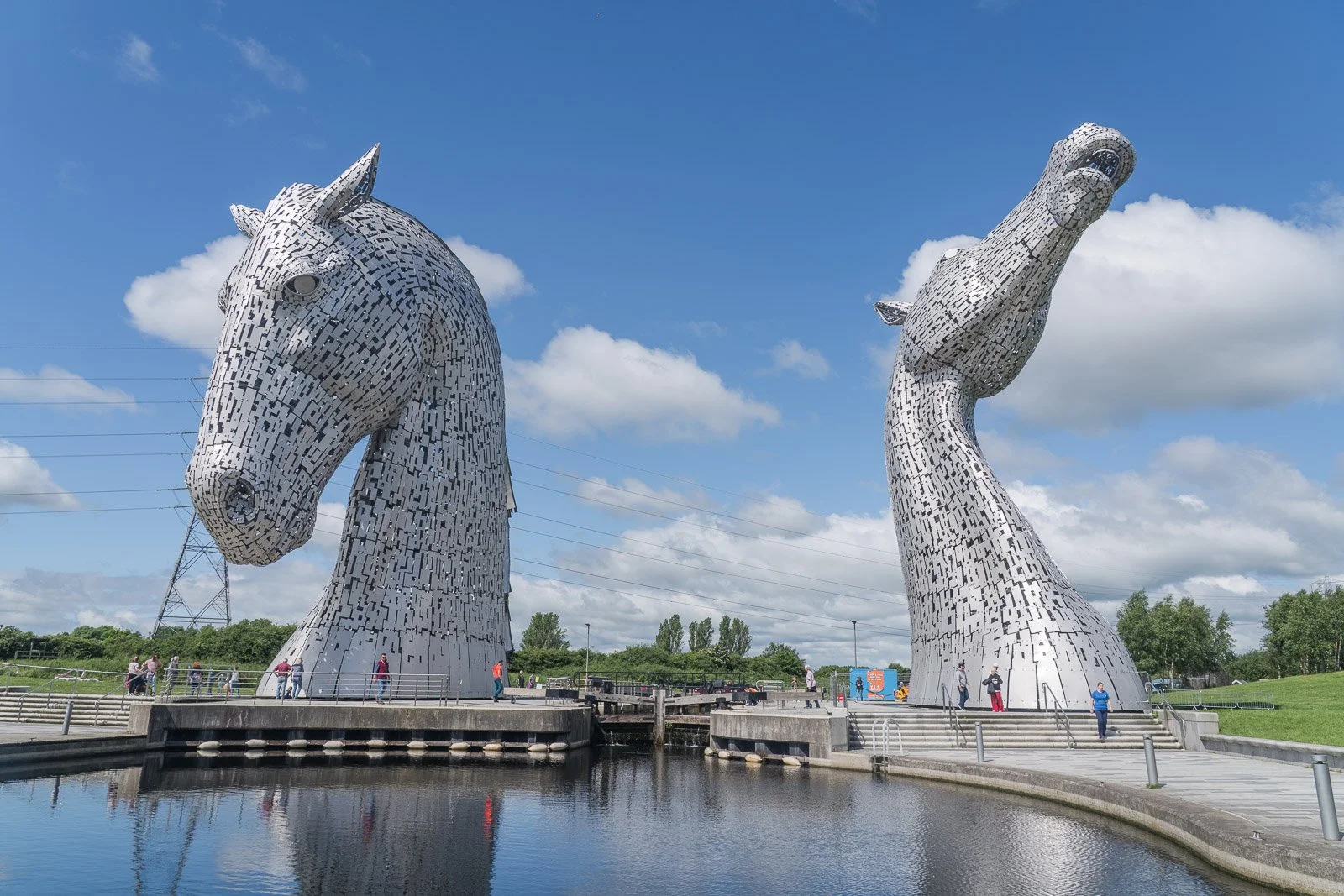
The Kelpies: An Iconic Landmark in Central Scotland
The Kelpies in Helix Park near Falkirk are 30-metre-high horse sculptures inspired by Scottish folklore and industrial heritage, with tours, night lighting and adventure climbs.
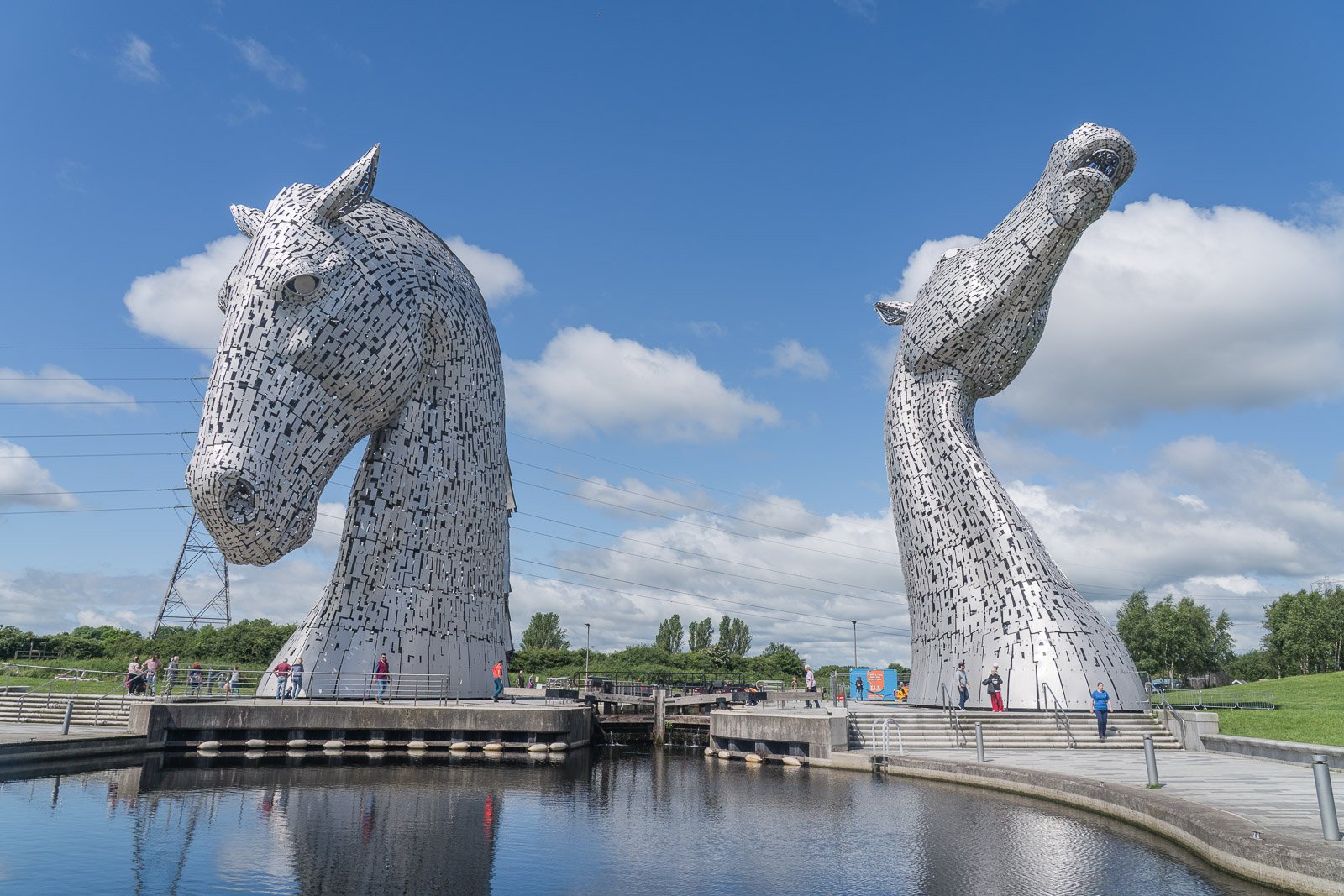
Located in Helix Park near Falkirk, The Kelpies are a pair of 30-metre-high stainless-steel horse-head sculptures, each weighing 300 tons. Designed by renowned Scottish sculptor Andy Scott and unveiled in 2013, they have become one of Scotland’s most iconic landmarks, blending mythology, industrial history, and breathtaking artistry.
The name “Kelpies” draws from Scottish folklore, where shape-shifting water spirits, often depicted as black horses, haunted lochs and rivers with supernatural strength. These mythical beings symbolise the allure and danger of Scotland’s waters, a theme echoed in the sculptures’ imposing presence.
Beyond their mythological roots, The Kelpies pay tribute to Scotland’s industrial heritage and the “heavy horses” that powered its economy in the 18th and 19th centuries. From hauling goods along canals to ploughing fields and aiding construction, horses like the Clydesdales embodied strength, resilience, and grace. Scott based his sculptures on two real Clydesdales, Duke and Baron, capturing these noble animals' essence and role in Scottish society.
The Kelpies come alive at night, illuminated by changing coloured lights that create a magical, almost otherworldly glow. They stand as ethereal guardians of the Forth & Clyde Canal, a stunning centrepiece within Helix Park, a community space revitalised by Falkirk Council’s regeneration project.
The Kelpies Visitor Centre offers interactive exhibits, guided tours, and insights into the sculptures’ construction and significance. New for this year, visitors can embark on a thrilling 25-metre aerial climb to the mouth of Baron, one of the Kelpies. The ascent involves ladders, cable crossings, and suspended platforms, culminating in a breathtaking view of the park and canal. Adventurous climbers can descend via abseil or a quick flight, simulating a free-fall experience.
This unique 90-minute experience, guided by experts, delves into Scotland’s canal history, the pivotal role of the Clydesdale horse, and the vision behind Andy Scott’s masterpieces.
Since their launch just over a decade ago, The Kelpies have welcomed over seven million visitors and contributed £85m in tourism spending to the Falkirk region annually.
The BLiSS Trail
The BLiSS Trail is a public art trail in Loch Lomond & the Trossachs linking Balquhidder, Lochearnhead, Strathyre and St Fillans, with over 20 outdoor artworks to discover.
Set within a quieter region of Loch Lomond and the Trossachs National Park is the inspiring BLiSS Trail. The name comes from the initials of the participating villages, Balquhidder, Lochearnhead, Strathyre, and St Fillans.
Discover some or all the varied and fascinating collection of art pieces along the trail most of which are created by Scottish artists using local inspiration and recycled materials.
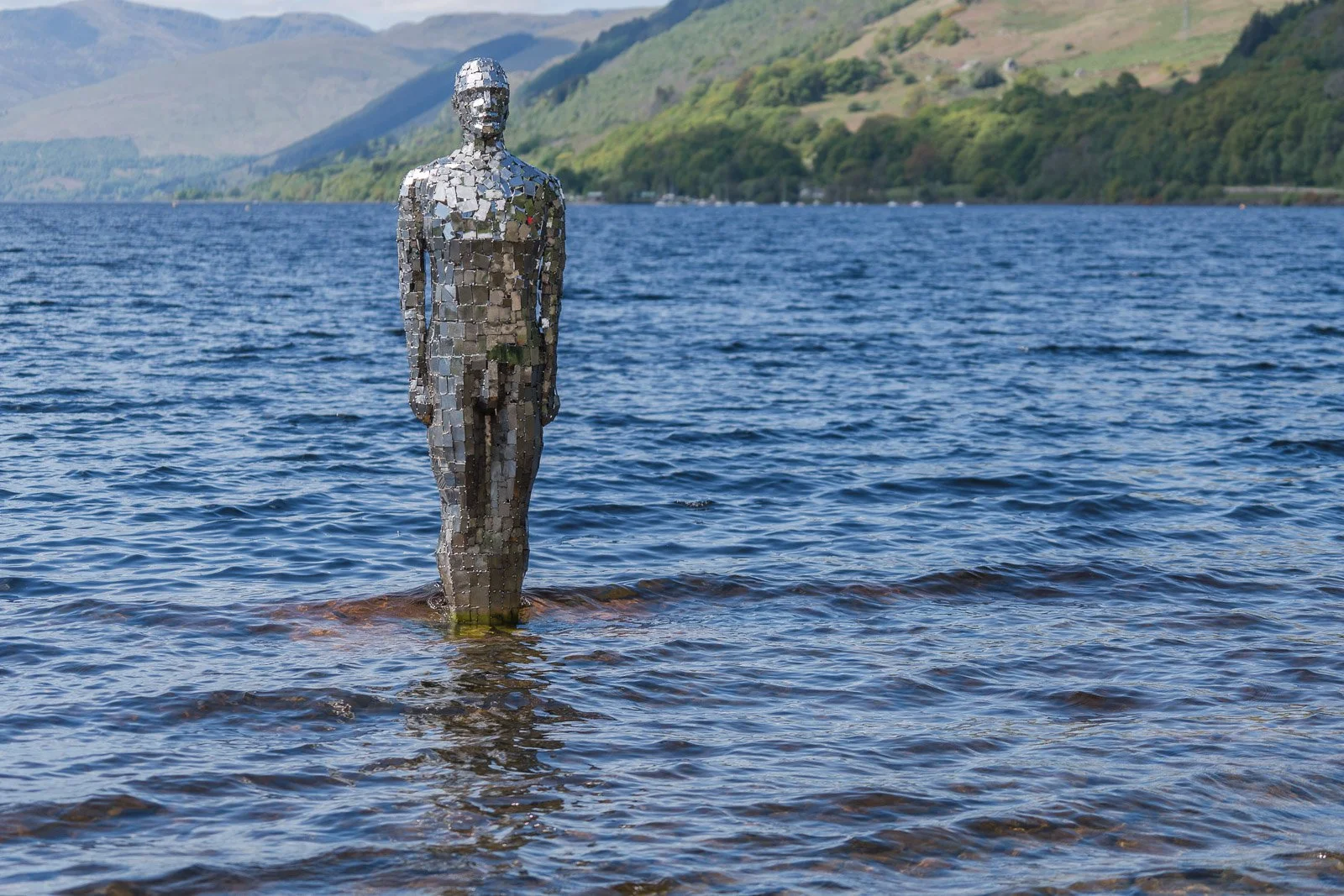
The Mirrored Man in the Loch
The trail has been boosted this year with the return of its most famous item - STILL, the mirrored sculpture by acclaimed artist Rob Mulholland, who lives and works in Drymen.
For years, this ethereal figure stood emerging from Loch Earn, reflecting the water, sky, and surrounding hills in a way that made him seem to vanish on misty mornings or shimmer like a ghost on still days. However, in 2020, STILL was removed when the hotel it was located outside of changed hands.
To the delight of locals and visitors, it finally returned to the loch in spring, fully restored and gleaming again. STILL's return is thanks to St Fillan’s in Bloom, who raised the money to repurchase it with the owner's blessing. When I visited to take these photographs, there were many others also getting pictures, and a search on Instagram will bring up a stack of amazing images, often at sunrise or sunset.
Nearby "Fish Out of Water" by Lynne Shroder at Achray House adds a whimsical and local wildlife charm.
Lochearnhead boasts several standout installations. At the Briar Cottages gardens, Blawn Wi the Wind, a steel thistle sculpture, captures the resilience of Scotland's national flower, while Stan the Stag stands proudly against a backdrop of Loch Earn.
"On Watch", painted by Aryshire artist Chelsea Rodger, a highland coo that is also a seat is illustrated with wildlife and flora. The sister cow'ch, Moodnight Magic is opposite the Four Seasons Hotel, St Fillans.
You'll also see Ewen - Westies of Craggan, Kev Paxton's steel sculptures celebrating Scotland's beloved Westies.
Balquhidder's highlights include The Lookout, a mirrored hide between Loch Voil and Loch Doine that, on the outside, reflects its surroundings so perfectly it nearly disappears, but up-close gives you the unique perspective to see both these neighbouring lochs at the same time, thanks to the reflections. Park at Monachyle Mhor, walk through the field, and you might find a flock of sheep admiring themselves in the mirrors! Also on this stretch are The Sheiling, evoking ancient summer shelters.
Outside Balquhidder Village Hall, a red phone box has been converted into a free book and DVD exchange. Further up the road is the Halfway Totem Pole by Edward Chadfield, and just along the road at Kingshouse, there is a beautifully restored Old Victorian Signpost, a reminder of Highland journeys past.
Elsewhere on the trail, Strathyre is home to some of the most playful and community-spirited artworks, such as Drover's Bho, a metal highland cow by the NCN7 cycle path. Near The Broch Café, you'll find Thistle the Heilan' Coo, a colourful Highland cow by Wee Coo Co that's impossible not to smile at, and Ride Out Seats, a practical artwork by Jeremy Cunningham that nods to the area's cycling heritage.
You will find some other examples around the village, and in total there are over 20 installations to diiscover.
The BLiSS Trail demonstrates that public art doesn't need to be confined to a gallery. To find out more and download the trail map, visit: www.geotourist.com/tours/2040/BLiSS_trail
Article by Paul Saunders – read more at www.seelochlomond.co.uk
A Day on Inchcailloch – Loch Lomond’s Island Escape
Inchcailloch is a beautiful island on Loch Lomond, reached by a short ferry from Balmaha, with woodland walks, historic ruins, wildlife and panoramic summit views.
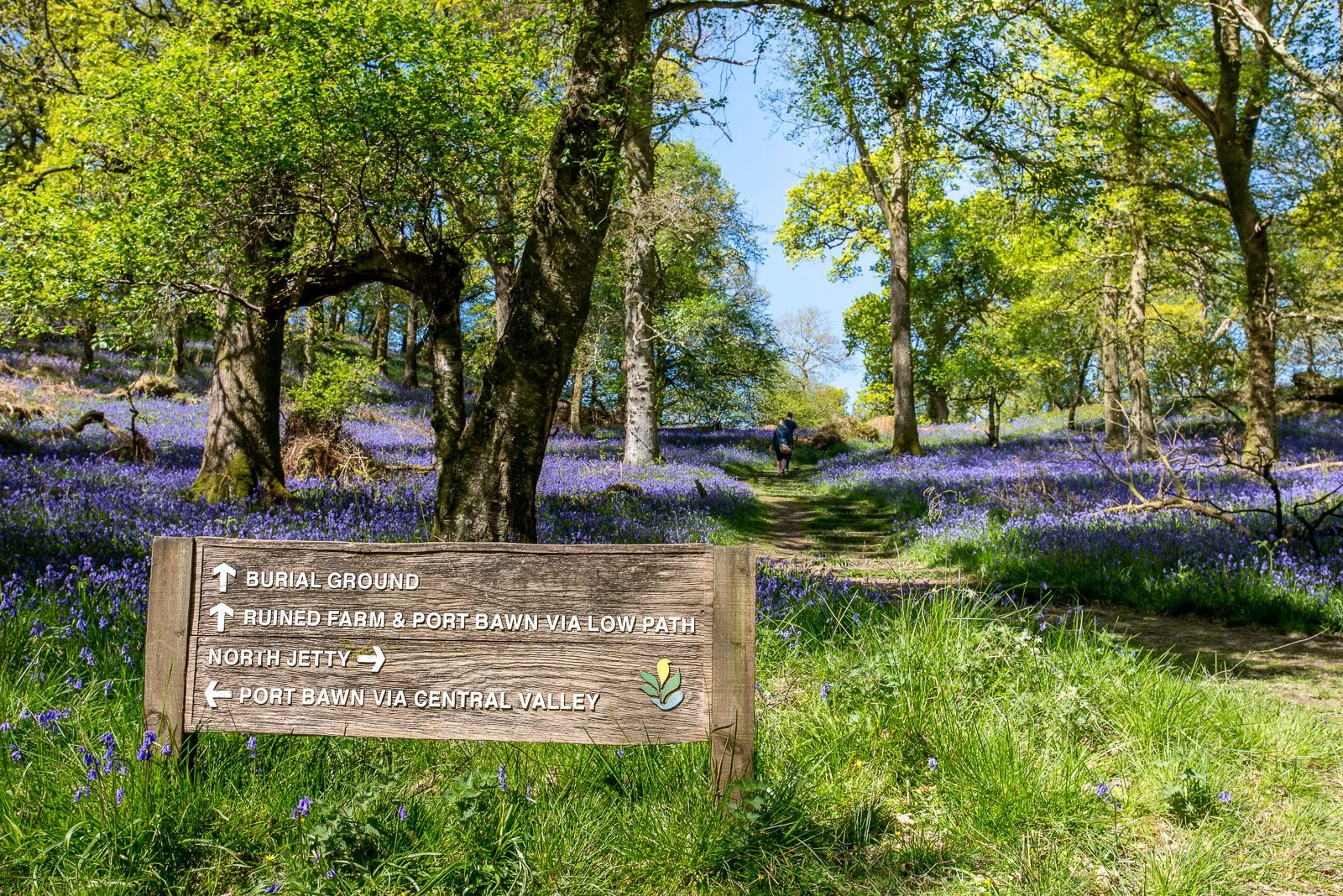
Inchcailloch, the wonderful Loch Lomond island is a short ferry ride from Balmaha, where you can connect with nature. You may not have been for years, or ever, but we highly recommend a trip to this small but beautiful island.
There’s something about the word “island” that captures the imagination. It suggests getting away, slowing down, and stepping somewhere more magical than everyday life. And that’s precisely what you’ll find on Inchcailloch, the island described as the jewel in the crown of Loch Lomond.
Here are some pictures from a visit earlier this summer, but just to make you aware, the crossings from Balmaha Boatyard depend on loch levels. If, like last year, they are too high, that presents a problem, as does a lack of rain and lower levels. So, it is advisable to check before coming.
The wooden boat Margaret takes passengers on the hour and a half, for £10 per adult. You’ll need to tell them when you plan to return, and we suggest at least 2.5 hours to have a good look around.
The crossing across the bay is only a few minutes, and as soon as you set foot on the island, you will feel its magical status.
Inchcailloch means “Isle of the Old Woman” or “Isle of the Cowled Woman”, named after St Kentigerna, an Irish missionary said to have settled here in the 8th century. The island has been a place of worship for centuries, and you can still visit the ruins of the medieval church of St Kentigerna, along with its ancient burial ground.
Look carefully at the gravestones, and you’ll spot familiar Highland surnames such as MacGregor. Rob Roy MacGregor’s family members are believed to be buried here. The island’s sheltered location made it an essential place for local communities, not just for worship but also for farming and woodland management.
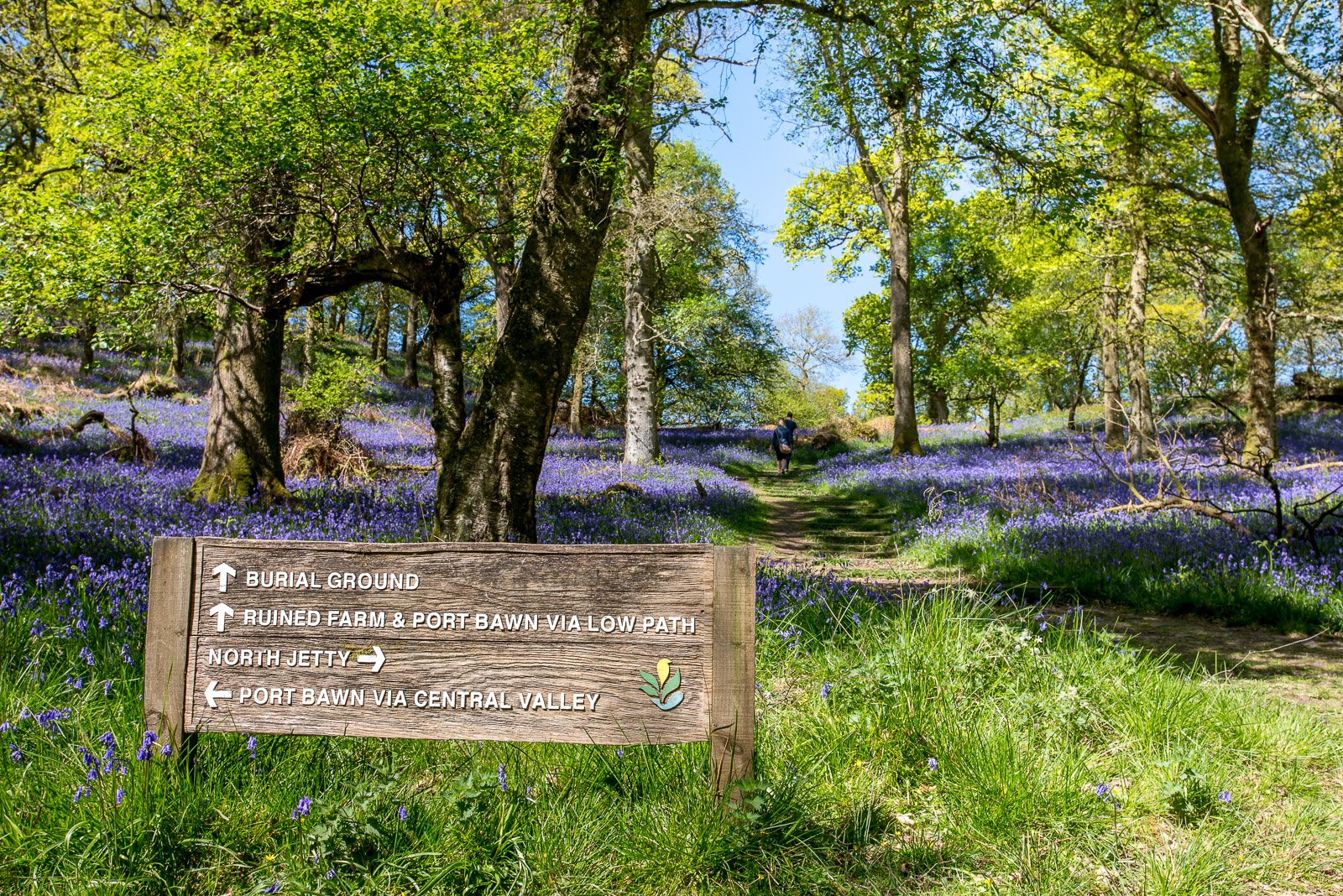
Inchcailloch is crisscrossed by well-maintained footpaths, offering two main circular trails. The shorter Low Path (1 mile) leads you gently through the woods to the burial ground and picnic area at Port Bawn, while Summit Trail takes you to the island’s highest point. It’s a bit of a climb (1 mile), but well worth it for the stunning panoramic views across the loch with a good view of the islands and onto Ben Lomond. From the summit, you can also spot Conic Hill and see the evidence of the line of the Highland Boundary Fault, which separates the Lowlands from the Highlands.
The island, part of the Loch Lomond National Nature Reserve, is home to a rich variety of birdlife, including woodpeckers, warblers, and buzzards. In spring and early summer, the woodland floor is a carpet of bluebells, and if you’re lucky, you might catch a glimpse of deer grazing in the undergrowth.
The best place to stop for a break is Port Bawn, a sheltered bay with picnic tables and a composting toilet. It’s a great spot to relax, take in the view, or have lunch before heading back along the Low Path or catching the boat to Balmaha.
Inchcailloch also offers a small, rustic campsite near Port Bawn, managed by the Loch Lomond & The Trossachs National Park Authority. It’s a basic site with space for just a few tents, providing a wild camping experience with the added security of a designated area and toilet facilities. Booking is essential.
Dogs are welcome on the island but should be kept on a lead to protect wildlife.
More guides about Loch Lomond and the Trossachs at seelochlomond.co.uk
Hunt the Haggis at Balmaha
Hunt the Haggis is a fun family trail in Balmaha by Loch Lomond, combining Scottish folklore, gentle walks and puzzles to uncover the mythical Wild Haggis.
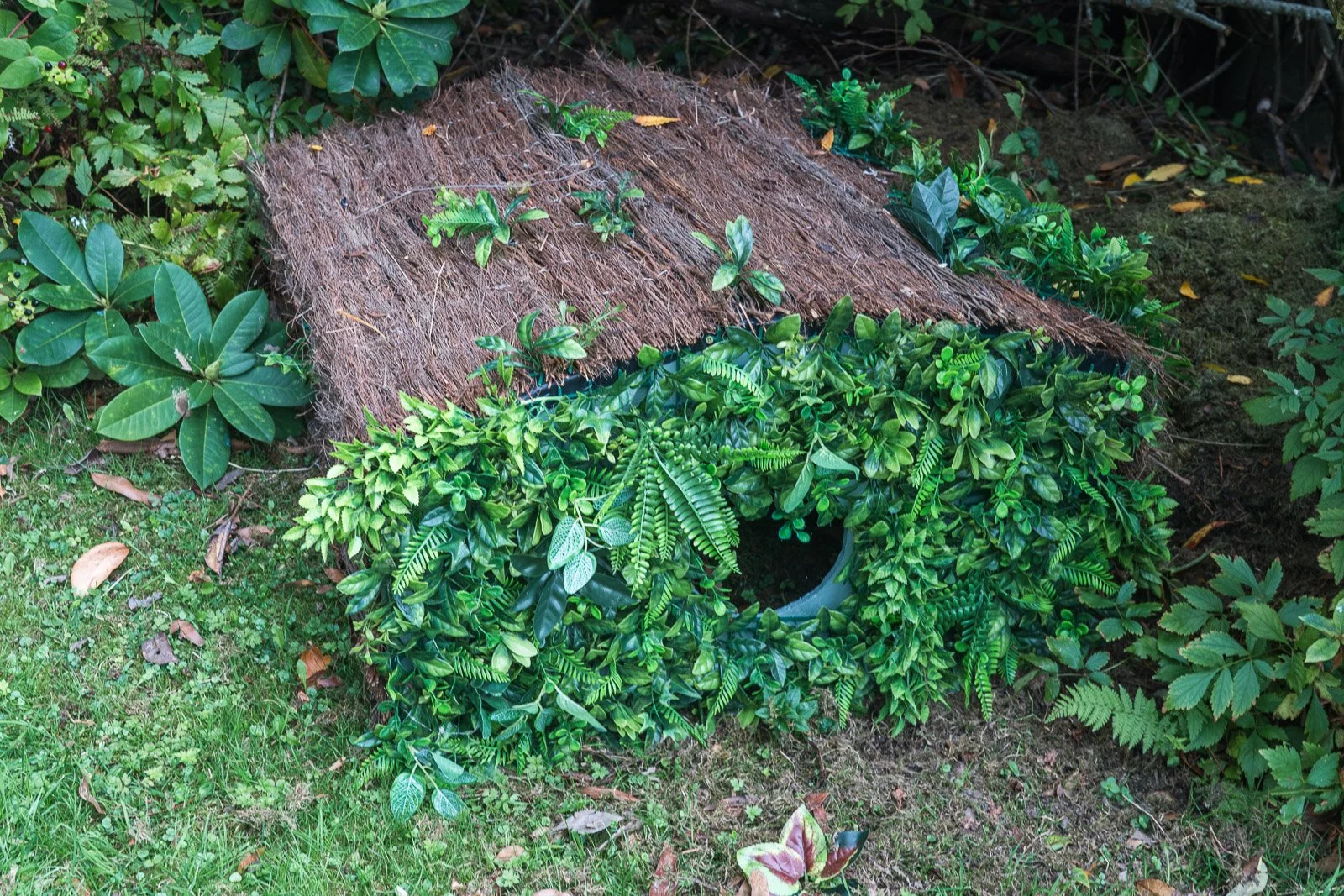
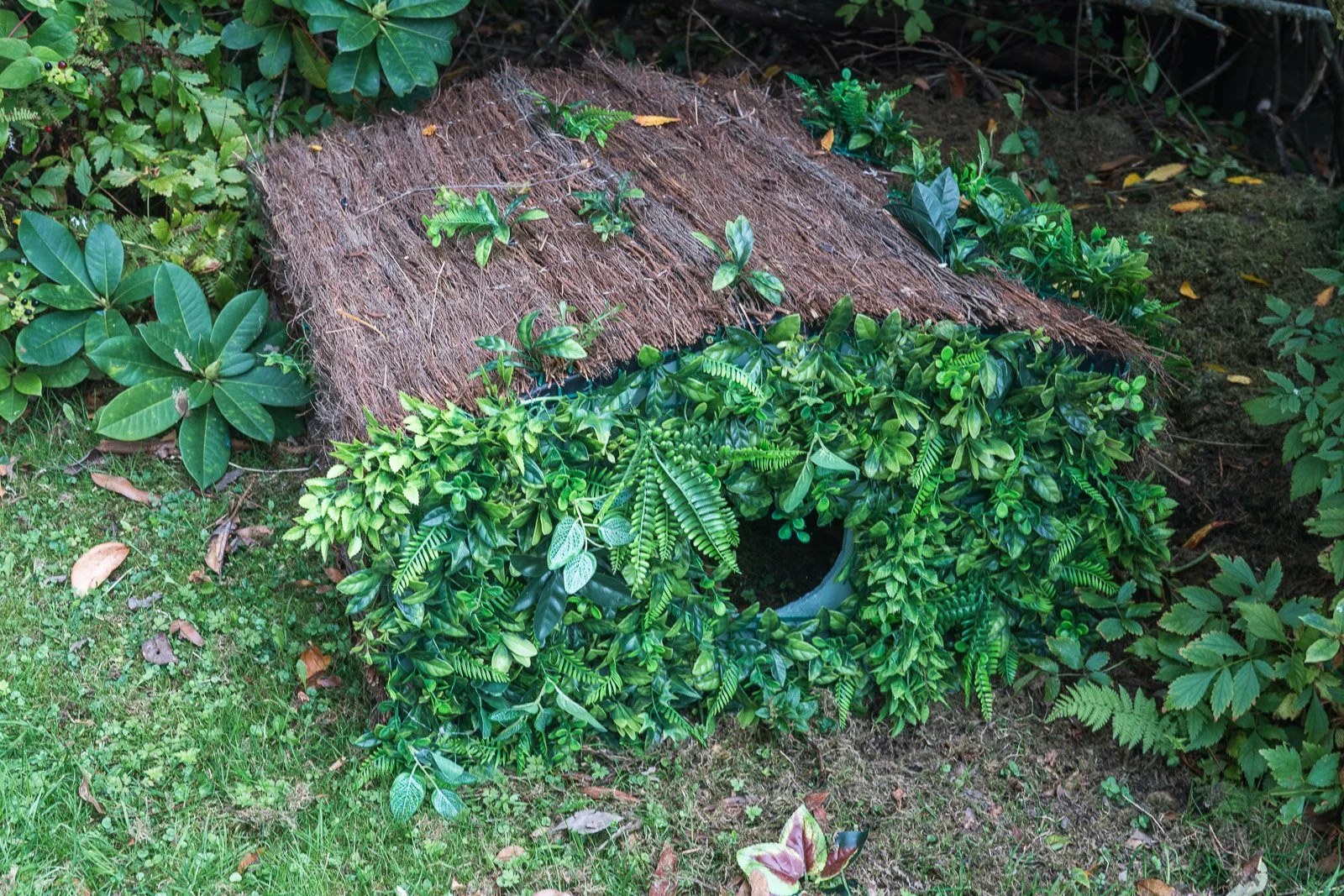
Thanks to The Oak Tree Inn in Balmaha, a delightful attraction combining Scottish folklore with family fun is open at Loch Lomond. Hunt the Haggis invites families to embark on a magical trail searching for the mythical Wild Haggis, a creature celebrated in Scotland’s humorous legends.
The idea for this engaging activity comes from Stuart Fraser of The Oak Tree Inn. Inspired by the enduring charm of Scotland’s tales about the elusive Haggis, Stuart and his team have crafted an experience that brings the myth to life. “We wanted to create something that sparks the imagination and adds a touch of fun for families visiting Balmaha,” Stuart explains.
Participants can purchase a trail map at The Oak Tree Inn, St Mocha, or Balmaha Village Shop to start their adventure. The map leads hunters to hidden Haggis houses scattered throughout the village and nearby woodland paths. Each house bears a nameplate, and hunters must collect the first letter of each name to reveal a secret codeword. Cracking the code is the ultimate goal, but the journey is filled with laughter, learning, and discovery.
Once families solve the mystery, they can visit the Village Shop to share their findings. All participants receive a small prize and the satisfaction of unravelling one of Scotland’s most whimsical mysteries. Along the way, they’ll uncover fascinating facts about the Wild Haggis, such as its unique anatomy. Did you know Haggis have legs shorter on one side to help them run on steep hills?
The trail is designed for all ages and offers a gentle walking experience around picturesque Balmaha. Stuart and his team hope to expand the concept, with ideas including Haggis-making workshops, seasonal events, and themed merchandise.
“We want this to be more than a one-time activity,” says Stuart. “It’s about creating lasting memories and showcasing the magic of Balmaha for locals and visitors alike.”
Participants are urged to proceed carefully. Wild Haggis are famously shy, often rolling down hills in a furry blur when startled. However, participants may be lucky to see them in their individually styled homes.
More Haggis Fun Facts
Haggis Has Been Around for Centuries
Haggis has a long history in Scotland, with records suggesting it has been enjoyed since at least the 15th century. While similar dishes appeared across Europe, the Scottish version became iconic. Its origins reflect a practical approach to cooking, where all parts of the animal were used to avoid waste.
A Dish for the Outdoors
Traditionally, haggis was a convenient meal for hunters and travellers. It was easy to prepare using fresh ingredients from a hunt, simple to transport, and could be cooked over an open fire, making it perfect for life in the Scottish Highlands.
Vegetarian and Vegan Haggis
Modern times have seen the creation of vegetarian and vegan haggis, ensuring everyone can partake in this cultural tradition. These plant-based versions often include ingredients like lentils, beans, nuts, and spices, delivering a similar flavour profile without the meat.